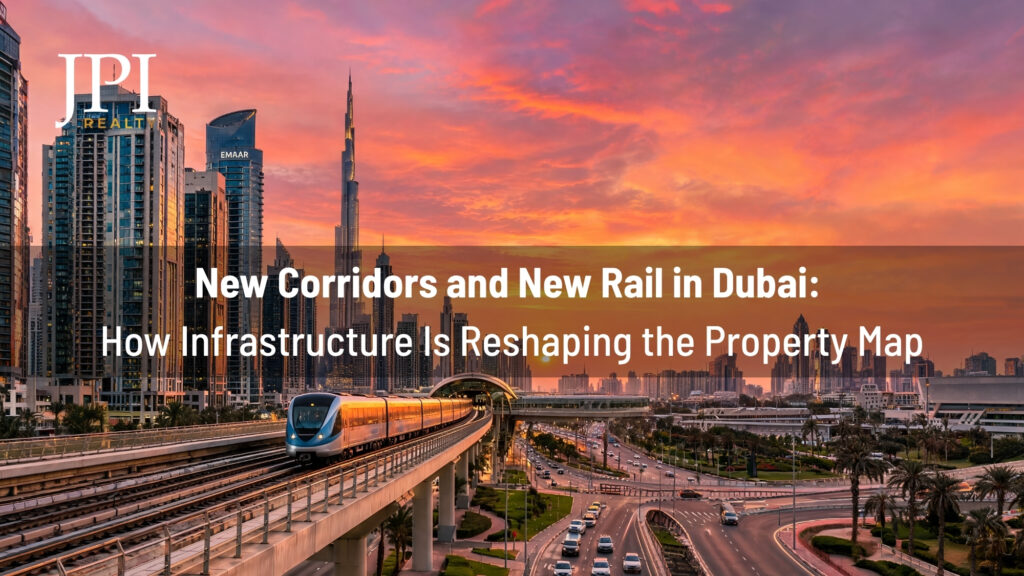
Dubai has always been a city that thinks ahead. From building new residential communities to expanding its road network, the emirate continues to invest in infrastructure that supports its growing population and changing lifestyle needs.
Today, some of the biggest developments are happening beyond the skyline. New metro lines, upgraded highways, strategic road corridors and railway connections are changing how people move around the city. And as connectivity improves, the property landscape is evolving too.
For homebuyers, tenants and property investors, these changes bring an important question: Could the next property hotspot be in an area that is still developing today?
Let’s look at how Dubai’s upcoming transport infrastructure could influence its real estate market.
1. Dubai Metro Blue Line: Connecting More Communities
One of the most anticipated transport developments is the Dubai Metro Blue Line.
With an investment of over AED 20.5 billion, the 30-kilometre route will feature 14 stations and connect several residential, educational and commercial districts.
The line will serve communities including:
- Dubai Creek Harbour
- Dubai Festival City
- International City
- Dubai Silicon Oasis
- Academic City
- Mirdif
- Al Warqa
The project is designed to serve approximately one million people and improve connections with the existing Red and Green Metro Lines.
For residents, this means better access to workplaces, universities, shopping destinations and other parts of Dubai. For the property market, improved public transport can make previously less-connected communities more attractive to people looking for convenient places to live.
2. Dubai Metro Gold Line: Opening New Property Opportunities
Dubai’s transport plans go beyond the Blue Line. The newly announced AED 34 billion Gold Line is another major step towards building a more connected city.
Spanning 42 kilometres with 18 stations, the Gold Line will be Dubai’s first fully underground metro line.
It will connect several important locations, including:
- Al Ghubaiba
- Mina Rashid
- City Walk
- Business Bay
- Meydan
- Nad Al Sheba
- Jumeirah Village Circle (JVC)
- Jumeirah Golf Estates
The line will also connect with the existing Red and Green Lines and integrate with Etihad Rail at selected locations.
For the real estate sector, this is particularly interesting because the route connects established neighbourhoods with developing residential communities.
Areas such as Meydan, JVC and Jumeirah Golf Estates could benefit from improved accessibility, making them worth watching as the project progresses.
The Gold Line is scheduled to open on 9 September 2032.
3. New Road Corridors: Making Daily Travel Easier
While metro expansion is important, Dubai is also investing heavily in its road network.
One significant development is the Latifa bint Hamdan Corridor Project, awarded at a cost of AED 2 billion.
Extending approximately 12 kilometres, the corridor will connect several major roads, including Sheikh Zayed Road, Al Khail Road, Al Meydan Street, Sheikh Mohammed bin Zayed Road and Emirates Road.
The project is expected to improve connectivity for communities such as:
- Nad Al Sheba
- Dubai Hills Estate
- Al Barari
- Majan
- Living Legends
- Mohammed Bin Rashid City
Once completed, the corridor is expected to reduce travel time between Umm Al Sheif Street and Emirates Road from 33 minutes to approximately 15 minutes.
Another major development is Dubai’s New Fourth Corridor, an approximately 80-kilometre road network connecting Al Shanouf Road in Sharjah to Al Faya Road in Abu Dhabi.
The project will strengthen connections between the emirates while supporting access to Al Maktoum International Airport and Etihad Rail.
These developments are important for residents and businesses that depend on convenient road connectivity, particularly in Dubai’s expanding residential and commercial districts.
4. Etihad Rail: Connecting Dubai Beyond Its Borders
Dubai’s property market is also set to benefit from the wider UAE railway network.
Etihad Rail is developing a national railway network designed to connect major cities and economic centres across the UAE.
Its passenger rail plans are expected to introduce another travel option for people commuting between emirates.
For Dubai, better railway connectivity could make living and working across different emirates more convenient. It could also support demand for residential and commercial properties around strategically connected locations.
As the network develops, accessibility will become an increasingly important factor for people choosing where to live, work or invest.
5. What Does This Mean for Dubai’s Property Market?
Infrastructure development does more than improve traffic conditions. It can gradually change how people view different neighbourhoods.
Here are a few ways these developments could influence the real estate market.
Increased Interest in Emerging Communities
Areas that previously felt far from major business districts may become more appealing when better transport connections are introduced. This could encourage more tenants and buyers to explore developing communities.
Greater Convenience for Residents
Easy access to metro stations, major highways, workplaces and everyday facilities can make a property more attractive. For many tenants, convenience is just as important as the size or appearance of an apartment.
New Opportunities for Investors
Investors may start looking beyond established locations and consider communities positioned to benefit from future infrastructure. However, potential returns will depend on factors such as purchase price, supply, rental demand and actual project delivery.
More Balanced Urban Development
As transport networks expand, development opportunities can spread across different parts of Dubai. This supports the city’s long-term vision of creating well-connected communities rather than concentrating growth in a few established locations.
6. What Should Property Buyers and Investors Look At?
Infrastructure announcements can create excitement, but buying a property requires more than following the latest development news.
Before making a decision, consider:
- Project timelines: Check whether the infrastructure is proposed, under construction or completed.
- Actual accessibility: Look at the distance between the property and the planned metro station or road connection.
- Rental demand: Understand whether tenants are already looking for properties in the area.
- Property supply: Consider upcoming residential developments and competition.
- Long-term value: Evaluate the location, developer reputation, service charges and overall investment potential.
A property near a planned metro station may offer an interesting opportunity, but its future performance is never guaranteed.
The Road Ahead for Dubai Real Estate
Dubai’s infrastructure expansion reflects a bigger vision for the city. New metro routes, improved road corridors and national railway connections are helping shape how communities grow and how people experience everyday life.
For the real estate market, these developments could open doors to emerging locations, create new investment opportunities and strengthen the appeal of well-connected neighbourhoods.
The important thing is to look beyond today’s property hotspots and understand where the city is heading.
At JPI Realty, we believe a good property decision starts with understanding not just the location today, but also the opportunities it could offer tomorrow.
Whether you are planning to buy, rent or invest in Dubai, our team can help you explore the right communities and make informed property decisions.
Leave a Reply